
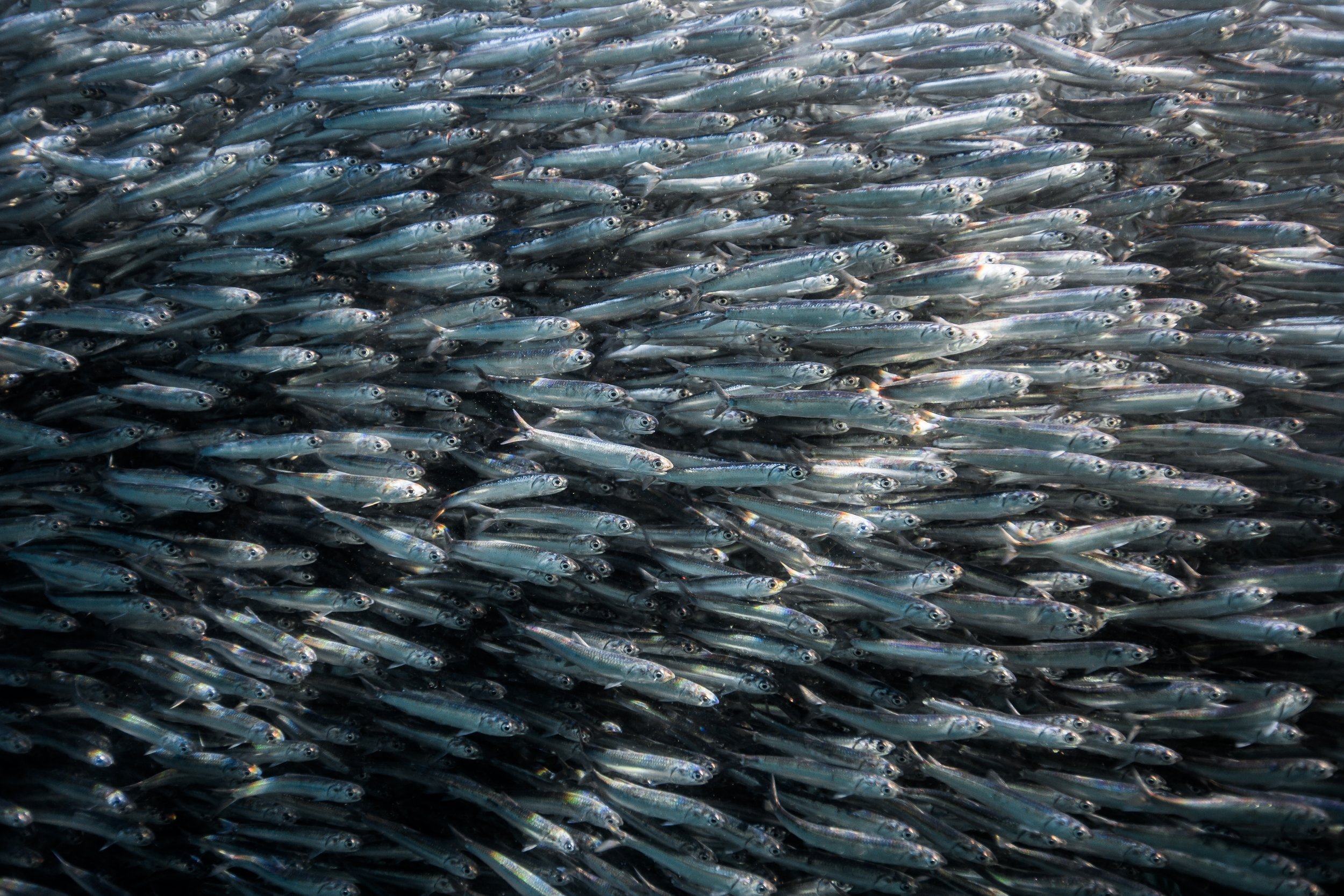
The Sardine Run is often referred to as the “Greatest Shoal on Earth,” a natural phenomenon that draws predators and marine enthusiasts alike. While the South African Sardine Run is the most famous, a similar event unfolds in Mexico’s Magdalena Bay, offering a unique twist on this oceanic spectacle. Both migrations are remarkable in their own right, but they offer distinct experiences for divers and wildlife lovers.
South African Sardine Run: The Ocean’s Greatest Feast
Every winter (May to July), millions of sardines migrate along South Africa’s eastern coastline, moving northward from the cold waters of the Cape. The sheer scale of the migration is astounding, with sardine schools stretching up to 15 kilometers long and drawing a frenzy of predators. Common dolphins are the primary architects of the action, corralling sardines into bait balls while bronze whaler sharks, blacktip sharks, and Cape gannets dive into the chaos. Humpback whales and bryde’s whales often join the feast, completing the marine drama.
The action is fast-paced and unpredictable, dictated by ocean currents and weather conditions. Divers and snorkelers need to be prepared for strong currents and chilly water, but the rewards are unmatched: bait balls swarming with life and predators attacking from every angle.

Mexico’s Sardine Run: Magdalena Bay’s Hidden Gem
In Magdalena Bay, located along Baja California Sur’s Pacific coast, a sardine migration of a smaller but equally fascinating scale occurs from November to January. This event is less about colossal bait balls and more about the variety of predators it attracts. Striped marlin, sea lions, and bottlenose dolphins dominate the scene, working together to hunt the sardines in synchronized chaos.Unlike South Africa, Magdalena Bay offers warmer waters and clearer visibility, making it more accessible to a broader range of divers and snorkelers. The sardine migration here is slower-paced, giving observers more time to appreciate the intricate behaviors of the predators. The presence of frigatebirds, pelicans, and even occasional humpback whales adds to the spectacle.

Key Differences Between the Sardine Runs
| Aspect | South Africa | Mexico |
| Scale of Migration | Massive shoals stretching kilometers | Smaller, more localized sardine aggregations |
| Predators | Dolphins, sharks, whales, Cape gannets | Marlin, sea lions, dolphins, whales |
| Season | May–July | November–January |
| Water Temperature | Cold (15–20°C / 59–68°F) | Warm (20–25°C / 68–77°F) |
| Experience Pace | Fast and chaotic | Slower and more focused |
Which Sardine Run Should You Experience?
The choice depends on the type of adventure you’re seeking.
If you crave adrenaline and raw ocean drama, the South African Sardine Run delivers unmatched chaos and scale. It’s a bucket-list experience for those willing to brave colder waters and unpredictable conditions.
On the other hand, if you prefer warmer waters and a more intimate, photographer-friendly experience, the Mexican Sardine Run in Magdalena Bay is ideal. Its slower pace allows for better observation of predator behaviors, making it perfect for naturalists and underwater photographers.
Both events showcase the awe-inspiring power of the ocean and its ability to sustain life on an epic scale. Whether you choose South Africa or Mexico, witnessing a Sardine Run is a reminder of the ocean’s beauty, its fragility, and the intricate web of life that depends on these migrations.