

Mo’orea vs Tonga: Where Should You Swim with Humpback Whales?
Two extraordinary destinations. One of the ocean’s greatest migrations. And two very different ways to experience it.
Every year, thousands of travellers dream of entering the water with humpback whales. For many, that dream begins with a question: Is it better to swim with whales in Tonga or Mo’orea, French Polynesia?
Both destinations offer the rare opportunity to observe humpback whales in their natural environment. Both are part of one of the most remarkable migrations on Earth. And both can deliver encounters that stay with you long after you’ve left the water.
But choosing between them isn’t simply a question of where you’ll see more whales.
It’s about understanding the ocean, the destination, the conditions and the kind of expedition you want to experience.
At Mind the Seas, we’ve chosen Mo’orea for our 2027 humpback whale expedition. Here’s why.
Mo’orea vs Tonga: Which Is Better for Whale Swimming?
Quick answer: Both are exceptional whale-swimming destinations, but Mo’orea is particularly appealing for travellers seeking a combination of humpback whale encounters, diverse marine life, spectacular landscapes and island exploration. Tonga is an excellent choice for those drawn to a more remote, whale-focused experience.
Neither destination can guarantee an encounter. Humpback whales are wild animals, and every interaction depends on their behaviour, weather conditions and responsible operating practices.
The better question is not which destination has the best whales, but which experience is right for you.
The Humpback Whale Migration: Why They Come to the South Pacific
Every year, southern hemisphere humpback whales (Megaptera novaeangliae) undertake an extraordinary migration between their Antarctic feeding grounds and the warmer tropical waters of the South Pacific. After spending the austral summer feeding in nutrient-rich, high-latitude waters, these giants travel thousands of kilometres towards their breeding and calving grounds.
French Polynesia and Tonga are among the regions that welcome them. These tropical waters provide important habitats for mating, giving birth, nursing calves and resting before the long journey south.
Unlike Antarctica, where humpbacks build up energy reserves by feeding intensively, their time in tropical waters is largely devoted to reproduction and parental care. For travellers, this seasonal migration creates an extraordinary but limited window to observe these animals.
When Is Whale Season in Mo’orea and Tonga?
In Mo’orea, humpback whales generally arrive from July onwards, with August, September and October being particularly popular months for whale encounters. The regulated observation season in French Polynesia extended from July 20 to November 20 in 2026.
In Tonga, the main humpback whale season generally runs from July to October, with the exact timing of whale presence varying between seasons and island groups.
Both destinations offer opportunities to observe mothers with calves, adult humpbacks and different social behaviours. However, whale abundance, underwater visibility, weather and encounter quality can change considerably from one day to the next. There is no scientifically reliable way to guarantee that a particular destination or week will deliver a better encounter.
And that’s part of what makes these expeditions real.
Mo’orea Is About More Than Humpback Whales
Imagine spending the morning searching the deep blue Pacific for humpback whales.
You spot a blow on the horizon. The captain slows the boat, observing the animal’s movements. A whale surfaces, takes a breath and disappears beneath the water. Perhaps the conditions allow a respectful in-water observation. Perhaps they don’t. Either way, the ocean has already given you something extraordinary. And when you return to land, the experience continues.
One of Mo’orea’s greatest qualities is that the island offers an entire world to explore beyond the whale encounters themselves.

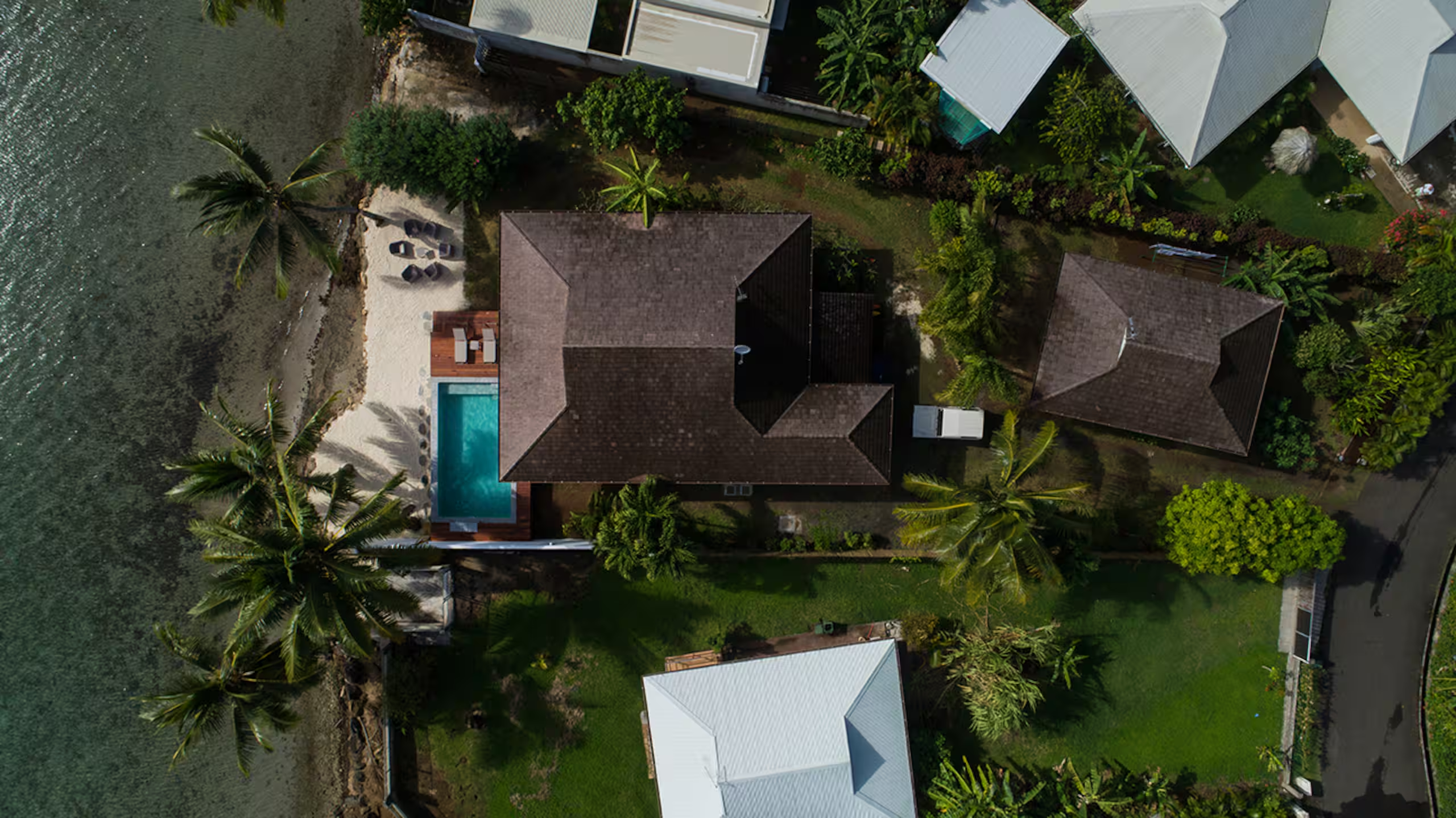
An Island Shaped by Volcanoes and Ocean
Mo’orea is a volcanic island in French Polynesia’s Society Islands, just a short ferry journey from Tahiti. Its dramatic mountain ridges rise almost vertically above emerald valleys, while a coral reef surrounds much of its coastline.
The island is characterised by two remarkable bays, Cook’s Bay and Opunohu Bay, separated by Mount Rotui. Beyond these landscapes lies another ecosystem: the coral lagoons, reefs and ocean waters surrounding the island. Here, travellers can discover a remarkable variety of marine life, including blacktip reef sharks, stingrays, sea turtles and colourful reef fish.
The surrounding reefs also offer opportunities to explore coral habitats and understand the ecological relationships that make tropical marine ecosystems so extraordinary.
For us, this diversity matters.
An expedition should help you understand a destination, not just encounter one species within it.
What Can You Do in Mo’orea Besides Swimming with Whales?
An extended stay on the island creates opportunities to discover another side of French Polynesia.
You might spend your free time hiking through Opunohu Valley, exploring tropical forests, visiting archaeological sites, snorkelling in the lagoon or learning about Polynesian traditions with local guides.
You can discover local food, visit independent businesses and experience the landscapes that have shaped island life for generations.
There is no shortage of things to do.
And importantly, these experiences offer meaningful alternatives when whale-swimming conditions are unsuitable.
Mo’orea’s Geography Offers Valuable Flexibility
Whale swimming takes place in the open ocean. That means conditions matter. Wind, waves, swell, currents and visibility can all influence whether an excursion is safe and whether an in-water encounter is possible. The South Pacific is not always the calm, glassy ocean that appears in travel photographs. Even during whale season, conditions can change quickly.
Can You Swim with Whales in Mo’orea on Windy Days?
Sometimes. Mo’orea’s coastline offers different exposures to wind and swell, allowing experienced local captains to assess whether another section of the island has more suitable conditions. Depending on wind direction and ocean conditions, one side of the island may be more sheltered than another.
This geographical diversity can give local operators greater flexibility when planning their day. However, it is important to understand the limits of that advantage. A sheltered coastline does not automatically mean safe whale-swimming conditions, and encounters cannot simply be moved into a calm lagoon.
In Mo’orea, regulated whale approaches take place in designated open-water environments, not inside the lagoon, passes or bays. If the weather or the animals’ behaviour makes an encounter inappropriate, the correct decision is to remain aboard, change the activity or cancel the excursion.
Flexibility is valuable. But the safety of the guests and the welfare of the whales must always determine what happens next.
Why Multiple Ocean Days Matter
A single whale-watching excursion offers only a brief opportunity to experience a complex natural event. Several days on the ocean allow more time to adapt to conditions and observe changes in whale behaviour. Some days might bring remarkable underwater visibility and calm seas.
Others may involve longer searches, shifting winds or encounters that are best enjoyed from the boat. This is why our Mo’orea expedition is designed around multiple days at sea rather than a single excursion.
We believe patience is an essential part of wildlife exploration.
The Island Itself Is Part of the Experience
There are places where the landscape stays with you as powerfully as the wildlife.
Mo’orea is one of them.
Its valleys are covered in tropical vegetation, its mountains emerge from the Pacific, and its lagoons transition through shades of turquoise before reaching the deep blue of the open ocean. But beyond its scenery, Mo’orea has a rich Polynesian cultural identity.
Across Polynesian traditions, the concept of mana is associated with spiritual power, authority and presence. Its meaning is rooted in cultural beliefs and practices that extend far beyond any simple description of an island’s atmosphere. Understanding a destination also means listening to the people who call it home.
For Mind the Seas, travelling responsibly involves recognising that the marine environment, local communities and cultural heritage are all connected. Our aim is not simply to bring travellers to beautiful places. It is to create opportunities for a deeper appreciation of the ecosystems and communities that make them extraordinary.
What Makes Tonga Different?
Tonga is equally deserving of its reputation as one of the world’s remarkable humpback whale destinations. Spread across several island groups, including Vava’u and Ha’apai, the Kingdom of Tonga offers a distinctive and often more remote South Pacific experience. Its seasonal humpback whale migration has made it an internationally recognised destination for regulated in-water encounters.
In certain parts of Tonga, travellers can spend several days exploring relatively remote marine environments, guided by experienced local operators. The archipelago also has its own extraordinary landscapes, reefs, traditions and cultural heritage. For travellers specifically seeking a remote whale-focused expedition, Tonga may be an excellent choice.
Mo’orea, however, offers a different combination: whale swimming, well-established travel connections via Tahiti, varied coastal environments, dramatic volcanic landscapes and numerous opportunities to explore the island.
Neither is inherently a better wildlife destination. They offer different ways of experiencing the South Pacific.
Mo’orea vs Tonga: Key Differences
| Mo’orea, French Polynesia | Tonga | |
| Main whale season | July–October, with regulated dates extending into November in 2026 | Generally July–October |
| Main experience | Whale encounters combined with island exploration | Whale-focused expeditions across different island groups |
| Landscape | Volcanic mountains, valleys, lagoons and reefs | Diverse tropical islands, reefs and remote archipelagos |
| Other marine life | Reef sharks, rays, turtles and coral ecosystems | Reef fish, sharks, turtles and varied marine habitats |
| Travel logistics | Accessible via Tahiti | Vary by island group; some require additional transfers |
| Ocean conditions | Exposed open ocean, with possible alternatives around the island | Variable open-ocean conditions depending on location |
| Best suited for | Travellers seeking wildlife, ocean exploration and a broader island experience | Travellers particularly interested in a remote, whale-centred journey |
Ethical Whale Swimming in French Polynesia
Swimming with humpback whales is an extraordinary privilege. It is also an activity that requires careful regulation.
French Polynesia established a marine mammal sanctuary in 2002, recognising the ecological importance of protecting whales and other marine mammals throughout its waters.
Commercial whale observation and swimming activities are regulated, with authorised operators required to follow specific rules designed to minimise disturbance.
The regulations were strengthened in 2026, including updated provisions concerning authorised guides and captains.
How Do Responsible Whale Encounters Work?
Under the 2026 operating framework, in-water whale encounters in French Polynesia are subject to strict conditions. Only authorised operators may conduct regulated approaches, with a maximum of six guests and one qualified guide in the water per vessel and a minimum swimmer approach distance of 15 metres.
Regulations must be checked again for the relevant travel season.
Responsible encounters also mean respecting several fundamental principles.
Whales must never be chased, touched, surrounded or deliberately separated from their calves. Swimmers must not obstruct their path or provoke changes in their behaviour. The animals must retain the freedom to continue their natural activities without interference. And if the whales display signs of avoidance, stress or disturbance, the encounter should not continue.
At Mind the Seas, we believe an encounter should never be measured by how close a person gets to a whale.
The quality of an encounter comes from observing wildlife without compromising its natural behaviour.
Sometimes the most responsible decision is not to enter the water at all.
Our Humpback Whale Expedition in Mo’orea, 2027
For our 2027 French Polynesia expedition, we’ve chosen to explore Mo’orea during the seasonal migration of humpback whales.
Our objective is to create an intimate ocean experience, combining time at sea with an appreciation for the destination that surrounds us.
Expedition Details
Destination: Mo’orea, French Polynesia
Dates: August 15–19, 2027
Ocean program: Four full days and one half day
Activity: Open-ocean snorkelling and regulated humpback whale encounters
Approach: Small groups, experienced local professionals and responsible wildlife observation
Our boat program is designed around the permitted in-water group size, with a maximum of six guest swimmers entering the water together with their authorised guide, subject to the applicable regulations.
We will spend our days exploring the ocean, searching for humpback whales and observing their behaviour.
Every decision to enter the water will depend on the animals, the weather and the judgement of our local team. There are no guaranteed whale encounters. No promised photographs. No manufactured interactions. Just a carefully planned opportunity to experience one of the ocean’s great migrations in a remarkable setting.
We take you remote. We let nature lead.
FAQs
Is Mo’orea or Tonga better for swimming with humpback whales?
Both destinations provide exceptional seasonal opportunities. Mo’orea is particularly attractive for travellers wanting to combine whale encounters with volcanic landscapes, snorkelling, hiking and island exploration. Tonga is especially appealing for travellers seeking an expedition centred on whales in remote island environments. Neither guarantees sightings or swims.
What is the best month to swim with whales in Mo’orea?
August, September and October are popular months for humpback whale encounters around Mo’orea. The wider regulated season extended from July 20 to November 20 in 2026. The best choice depends on the type of expedition, weather conditions and the variability of the whale migration.
Can you swim with humpback whales in French Polynesia?
Yes. In-water observations are possible under strict regulations and with authorised operators. Encounters take place only when animal behaviour, ocean conditions and safety requirements allow them.
Do you need a scuba diving certification to swim with whales in Mo’orea?
No. Whale swimming is a snorkelling activity and does not require a scuba certification. However, participants should be comfortable swimming in open-ocean conditions and following their guide’s instructions. Being confident in the water is essential.
Is swimming with humpback whales in Mo’orea safe?
Whale swimming involves inherent risks associated with open water, changing sea conditions and large wild animals. Authorised operators assess conditions and manage activities according to safety and environmental regulations. No operator can remove every risk, and a swim should never proceed when conditions are unsuitable.
Can you swim with whales inside Mo’orea’s lagoon?
No. Regulated approaches to humpback whales are not permitted inside Mo’orea’s lagoon, bays or passes. Whale-swimming activities take place in the open ocean under the applicable rules.
How many people can swim with whales at once in Mo’orea?
Under the 2026 framework, a maximum of six guests and one qualified guide may enter the water from a vessel for a regulated whale encounter. Requirements should always be reconfirmed for the season in which you travel.
Are humpback whale sightings guaranteed in Mo’orea?
No. Humpback whales are migratory wild animals. Even during peak season, sightings and in-water opportunities depend on natural behaviour, environmental conditions and responsible operating decisions. Multiple days at sea provide more opportunities than a single excursion, but they do not guarantee an encounter.
What other marine animals can you see in Mo’orea?
Mo’orea is home to diverse marine ecosystems supporting reef sharks, stingrays, sea turtles, reef fish and numerous coral-associated species. Encounters depend on location, season and conditions.
The Ocean Doesn’t Owe Us an Encounter
There is a particular feeling that comes from entering the ocean without knowing what you’ll find.
You might wait for hours before spotting the first blow of a humpback whale.
You might spend an entire morning watching a mother and calf from a respectful distance, without entering the water.
Or you might experience one of those rare moments when the conditions align and a wild animal allows you to witness part of its world.
That uncertainty is fundamental to everything we do.
We don’t travel to the world’s most extraordinary marine environments to control what happens there.
We travel to understand them.
And in Mo’orea, the experience extends far beyond the whales.
It is the ocean, the mountains, the people, the landscapes and the journey of discovering an ecosystem on its own terms..
Join Us in French Polynesia August 15–19, 2027

Mo’orea Humpback Whale Expedition
For an intimate expedition dedicated to humpback whales, responsible exploration and the natural beauty of French Polynesia