
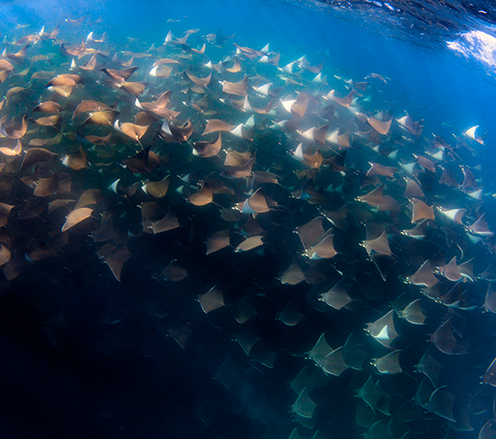

The Spectacle of the Mobula Munkiana Migration in Baja California Sur
Each year, the waters off Baja California Sur host one of the ocean’s most breathtaking natural events: the migration of Mobula munkiana, commonly known as the munks devil ray. These elegant, winged creatures travel to the warm, nutrient-rich waters of the Sea of Cortez to mate and give birth, creating a mesmerizing spectacle that attracts marine enthusiasts and researchers alike.
Who Are the Mobula Munkiana?
Mobula munkiana are small members of the mobulid family, closely related to manta rays. These rays can reach a wingspan of about 1.2 meters and are characterized by their streamlined bodies, large pectoral fins, and distinctive cephalic fins near their mouths, which they use to funnel plankton and small fish. They are highly social animals, often found swimming in vast schools, sometimes numbering in the tens of thousands, creating a truly awe-inspiring sight. Despite their common nickname, “devil rays,” they are harmless filter feeders, relying on the abundant plankton blooms in the region for sustenance.

Why Baja California Sur?
The warm, shallow waters of Baja California Sur, particularly in the Sea of Cortez, are critical for the life cycle of Mobula munkiana. From late spring to early summer, these rays converge here to feed on nutrient-rich plankton, mate, and give birth to live pups. The region’s sheltered bays and upwellings create the perfect environment for reproduction and nurturing their young. This dual purpose of their migration—feeding and reproduction—makes Baja California Sur a vital habitat for the species.
Aerial Acrobats of the Sea
One of the most captivating behaviors of Mobula munkiana during their migration is their spectacular aerial displays. They leap out of the water, reaching heights of up to two meters, and crash back down with loud splashes. These acrobatics, believed to be related to courtship, communication, or parasite removal, add a dramatic flair to an already stunning natural event. Witnessing hundreds of these rays leaping simultaneously is a surreal experience, whether from a boat or while snorkeling or diving.

A Unique Opportunity for Divers and Snorkelers
For those lucky enough to be in the water during the migration, the experience is magical. Swimming alongside thousands of rays, watching their rhythmic wingbeats, and observing their graceful movements is like being part of an underwater symphony. Key locations such as La Paz, Cabo Pulmo, and Espíritu Santo Island offer some of the best vantage points for experiencing this phenomenon.
A Call for Conservation
The migration of Mobula munkiana is a reminder of the ocean’s interconnectedness and the importance of protecting these habitats. Overfishing, habitat degradation, and pollution threaten their survival, underscoring the need for sustainable practices and marine conservation efforts. By preserving the Sea of Cortez, we can ensure that this incredible migration continues for generations to come.
Whether you’re a diver, snorkeler, or simply an ocean lover, witnessing the migration of Mobula munkiana in Baja California Sur is an experience that will leave you in awe of the natural world and its wonders.